

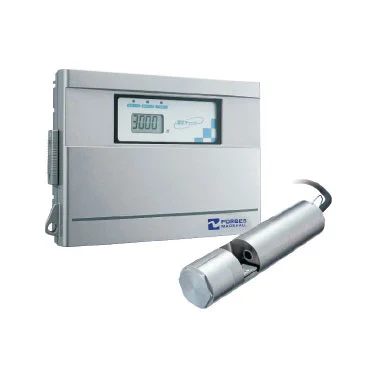
Turbidity Analyser FMSC-T3
Managing variable turbidity in massive clarifiers and filter backwash cycles requires a system that is both incredibly fast and resilient. The FMSC-T3 serves as the intelligent core, interfacing with robust stainless-steel sensors (FMTC-100, 500, or 3000) depending on your range requirements. Utilising an 860 nm optical light attenuation method, this system bypasses common errors caused by direct sunlight or internal chamber reflections. The sensors feature a heavy-duty swing wiper that cleans both sides of the sapphire glass, executing a clearing operation immediately upon power-up and at regular intervals to guarantee flow-independent precision.
Applications of FMSC-T3:
Automating filter backwash cycles to save pure water, monitoring raw water influents, preliminary treatment stages, and overseeing aeration basins or final filtration in waste water plants.
- Broad Measurement Range: Interchangeable sensors accommodate 0-100, 0-500, and 0-3000 FTU ranges
- Dual-Sided Swing Wiper: Aggressively clears bio-fouling from both sides of the optical pathway, ensuring continuous reliability
- Optical Attenuation Method: Uses 860 nm light attenuation, ensuring measurements are independent of color and ambient light interferences
- Lightning-Fast Response: Delivers process changes in less than 5 seconds, allowing immediate ON/OFF control of filter backwash sequences
 EverSense for WaterMAP
 EverSense for WaterVU
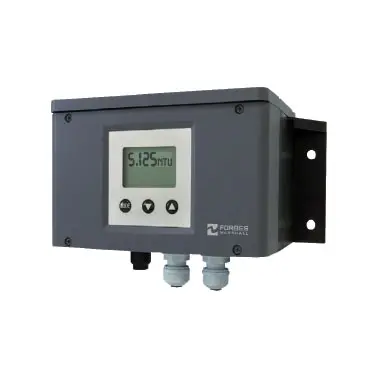 Turbidity Analyser FMTC-Mi100
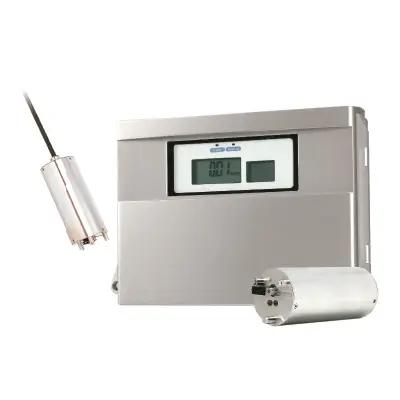 Turbidity Analyser FMTSC-10(E)
Frequently Asked Questions
EPA compliance (used in the FMTSC models) relies on the 90-degree scattered light method, which is the standard for regulatory environmental reporting in many regions. ISO 7027 compliance (found in the FMTC-Mi100) utilises an LED light source for nephelometric measurement, which is highly preferred for colored water and specific global drinking water standards.
The sensors are equipped with built-in automatic wiping systems. For instance, the FMSC-T3/FMTC sensors utilise a swing wiper on both sides of the lens, while the FMTSC series uses an automatic rotary wiper system with programmable cleaning intervals to scrub away fouling.
