
Smart RTUs: Driving Efficiency and Compliance in ETP Operations
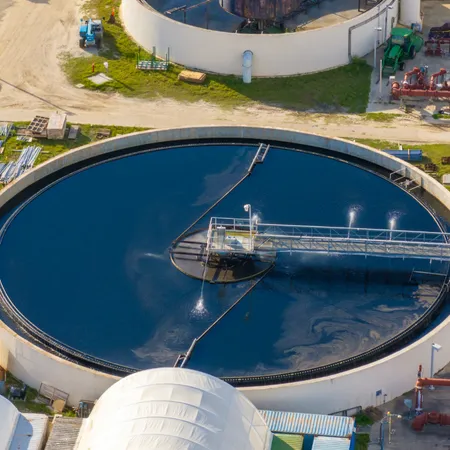
Effluent treatment plants are crucial for balancing economic progress with environmental protection. By monitoring key parameters like concentration, flow, and temperature, ETPs help industries maintain sustainability and mitigate the adverse effects of their activities. Treating wastewater is complex, demanding accurate data for effective treatment plan design.
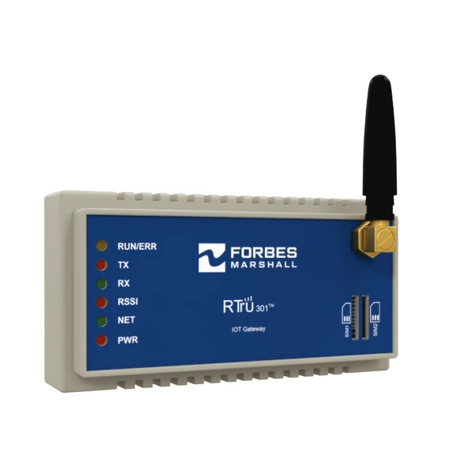
Smart RTU
Historically, ETPs have operated with limited technological assistance. However, the adoption of Industry 4.0 digital technologies now allows for the provision of efficient, transparent, reliable, and precise information. This empowers key stakeholders to make data-driven decisions.
Remote Terminal Units (RTUs) are vital in this digital ecosystem. These microprocessor-based electronic devices connect various pieces of hardware within a network to a Distributed Control System (DCS) or a SCADA system, transmitting sensor data to a central processor.
In the context of Industry 4.0, simply collecting data is insufficient. It is essential to analyze trends and gain insights to optimize processes for greater efficiency. This need is met by Smart RTUs, which integrate the functionalities of traditional RTUs and PLCs. Smart RTUs are capable of converting vast amounts of raw data into actionable, useful information, making them indispensable for modern ETP operations.
Common Effluent Treatment Plants (CETPs)
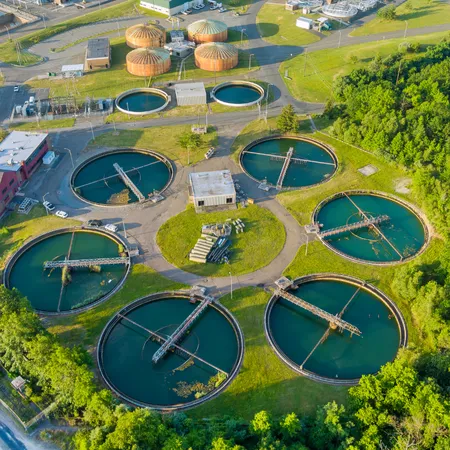
To effectively combat ground and air pollution, governments mandate that industries like leather, textile, and chemical sectors maximize the reuse of processed wastewater. Since implementing water recycling at every individual plant level is often not cost-effective, Common Effluent Treatment Plants (CETPs) become essential.
Here’s how a CETP functions:
- Effluent from all associated member industries is collected at the CETP.
- The CETP treats this effluent.
- The recycled water is then pumped back to the member industries for reuse.
This collaborative approach is crucial, as it not only improves overall water utilization but also significantly reduces groundwater pollution.
A key responsibility of the CETP is to accurately measure both the pollution discharge from each member unit and the intake of recycled water. The integration of cutting-edge Smart Remote Terminal Units (RTUs) offers features that allow for superior analysis, thereby contributing to the improvement of the CETP’s daily operational efficiency.
Benefits of Smart Remote Terminal Units (RTUs) for ETP Operations
Smart RTUs offer several key advantages for modern Effluent Treatment Plant (ETP) operations:
- Edge Intelligence and Computation: They provide accurate, real-time data on critical operational parameters like discharge volume, Total Dissolved Solids (TDS), and concentration. These devices also feature built-in computation capabilities for on-site data processing.
- Remote Management and Diagnostics: The Smart RTUs enable remote management of equipment across various effluent discharge locations. Specific operations, such as controlling effluent discharge pumps, can be centrally managed from the main ETP location. This facilitates inherent diagnostics and remote operational control.
- Single Point Data Functionality: By using distributed databases, Smart RTUs eliminate the necessity for manual data logging and report sharing. Key users can maintain control over access and availability of data for different stakeholders.
- Cross-Platform Data Access: The central repository software is versatile, capable of running on both cloud-based and on-premise servers. This cross-platform compatibility allows CETP members to access data seamlessly on various devices, including workstations, laptops, and mobile phones, regardless of whether the platform is open-source or licensed.
- Enhanced Cyber Security: High-level security measures are integral to the Smart RTUs, ensuring 24/7 access to vital information. Utilizing end-to-end VPN encryption and an inbuilt firewall, they provide robust cyber security to maintain critical data integrity and secure handling of the CETP operations.
Assessing and Optimizing CETP Performance using Smart Remote Terminal Units (RTUs)
Smart RTUs offer several functionalities to optimize CETP operations and management:
- Real-Time Total Concentrate Measurement
Measuring pollution effectively requires more than just volume. Smart RTUs calculate “Total Concentrate” by analyzing both the discharge volume and dissolved solids in real time. This metric serves as a precise and fair benchmark for quantifying the pollution load contributed by each member industry.
Edge Intelligence: RTUs calculate the Total Concentrate locally at the user’s campus, sending “useful information” instead of raw data to the central software.
Benefits: This ensures maximum transparency for users, reduces the processing load on the central system, and lowers associated cloud computing charges for data translation.
- Scheduled CETP Load Management
Smart RTUs enable the CETP to remotely control the discharge pumps of member units, which transmit effluent into the system via flow meters.
Load Balancing: The CETP can schedule pump operations by zone to manage the overall load 24/7 and maximize treatment efficiency.
User Control: This capability also allows the CETP to selectively block or unblock individual users as necessary.
- Discharge Pump Motor Health Monitoring
Given the corrosive nature of effluents, maintaining motor health is crucial for consistent outflow from member units and for operating the CETP at maximal treatment loads.
Real-Time Evaluation: RTUs evaluate motor health by correlating the energy consumed with the flow discharged through the motor in real time, helping to ensure maximum pumping efficiency.
- Tamper-Proof Operation
Smart RTUs ensure trouble-free operation at member sites by monitoring critical components (flow meter, skid, UPS, TDS sensor) and detecting mishandling.
Advanced Alerting: Utilizing independent tasks for communication and event generation, the RTU immediately sends an SOS SMS to preset numbers, in addition to email/central notifications, in the event of tampering.
Remote Configuration: Rules and monitoring parameters can be programmed and updated remotely.
- Edge Computing and Zero Data Loss
The Smart RTU acts as a powerful edge computing device capable of managing multiple complex tasks.
Data Aggregation: It supports continuous PLC programming, artificial intelligence, and complex protocols to aggregate data and generate hourly, daily, monthly, and yearly reports.
Distributed Applications: It can provide detailed information on salt discharge and reused water, linked to individual metering, supporting truly distributed applications.
- Flexible Connectivity Options
The Smart RTU supports a “many-to-many connectivity” model and various protocols like OPC UA and IIoT-based protocols.
Seamless Integration: Users can choose between a central SCADA, an on-premise solution, or cloud SCADA without the risk of data loss at any point during the project lifecycle.
- Compliance with Government Norms
The RTU can function as a miniature router, interfacing with an IP camera to provide a live video feed of each location.
Regulatory Compliance: This feed can be shared with government bodies like CPCB/SPCB servers, ensuring the CETP operates in full compliance with regulatory requirements.
- Comprehensive Project Life Cycle Support
The Smart RTUs are designed for easy maintenance throughout their operational life.
Over-the-Air Solutions: They offer over-the-air connectivity for device management, configuration updates, firmware upgrades, and device diagnostics.
The shift to Smart RTUs marks a non-negotiable step toward a sustainable future for the industrial wastewater sector. By integrating powerful edge intelligence, robust cyber security, and zero-loss data handling with the crucial ability to quantify pollution through “Total Concentrate,” these devices fundamentally transform CETP management. They move beyond mere data collection to provide real-time insights for optimization, load scheduling, and equipment longevity. Ultimately, Smart RTUs provide the efficiency, transparency, and assurance needed to meet stringent environmental regulations and demonstrate compliance to regulatory bodies. For ETPs and CETPs striving for operational excellence and maximum environmental sustainability in the Industry 4.0 era, leveraging Smart RTU technology is not just an upgrade—it is the definitive path to achieving reliable, tamper-proof, and highly optimized wastewater management.