
Understanding the Fundamentals of Compressed Air Systems
- Compressed air is as essential as steam, electricity, water, and gas in industrial manufacturing.
- It takes approximately 7–8 volumes of atmospheric air to produce 1 volume of air at 100 psig.
- Effective compressed air management requires viewing the system as two distinct parts: the Supply Side and the Demand Side.
- Initial equipment cost is only a fraction of the life cycle cost of a compressor. Energy and maintenance costs dominate the long-term operational costs.
- Without proper management, 20–50% of energy consumed by compressors can be lost to waste.
In the hierarchy of industrial utilities, compressed air stands alongside electricity, water, and natural gas, often referred to as the ‘fourth utility’. From small machine shops to massive integrated steel plants, almost every industrial facility relies on compressed air to drive production. Understanding the basics of compressed air systems function is the first step toward reducing operational costs and ensuring stable supply.
What is Compressed Air?
Compressed air is a form of stored energy that is used to operate machinery, equipment, or processes. Compressed air is used in most manufacturing and some service industries, often where it is impractical, expensive or hazardous to use electrical energy directly to supply power to tools and equipment
The Physics of Compression
To create this stored energy, an air compressor takes atmospheric air and reduces its volume mechanically.
- Compression Ratio: Typically, a compressor squeezes approximately 7 cubic units of air at atmospheric pressure into 1 cubic unit at an elevated pressure of about 100 psig (7 bar).
- By-products: The process is not perfectly efficient. Two primary by-products are generated during compression: Heat and Moisture. Managing these is critical, as excessive moisture can corrode piping and damage sensitive end-use equipment.
Introduction to Compressed Air Systems
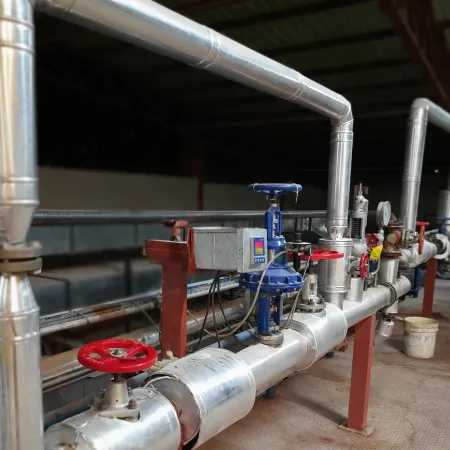
A compressed air system is more than just a compressor; it is a network of subsystems designed to generate, treat, and distribute air. For management purposes, the system is divided into the Supply Side and the Demand Side.
1. The Supply Side (Generation & Treatment)
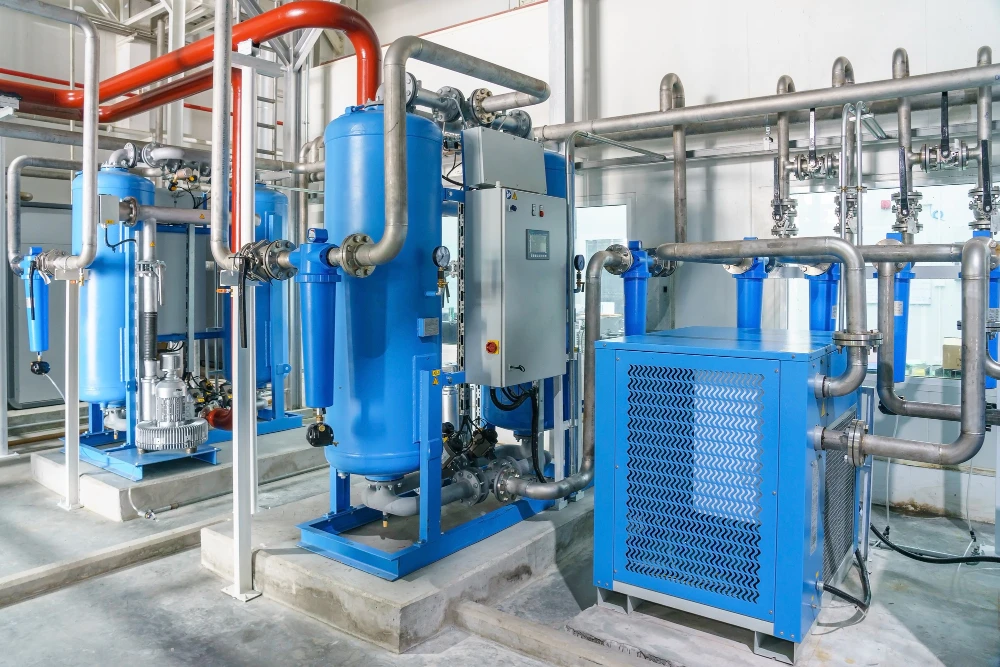
The objective of the supply side is to deliver clean, dry, and stable air at the required pressure in a cost-effective manner. The supply side consists of the the following components:
- Air Intake: Draws in ambient air; its quality (temperature and cleanliness) directly affects efficiency.
- The Compressor: This is the primary component or equipment that converts electrical energy into air power.
- Aftercooler: Reduces the temperature of the air immediately after compression to precipitate moisture.
- Treatment (Filters & Dryers): Removes contaminants and reduces the dew point to prevent liquid water from entering the lines.
- Primary Storage (Wet/Dry Receivers): Buffers the system against demand spikes and allows for better compressor control.
2. The Demand Side (Distribution & End-Use)
The demand side focuses on the efficient transport and usage of compressed air.
- Distribution Piping: Responsible for transporting or distributing the compressed air to the various sections of the plant.
- Secondary Storage: Receivers placed near high-demand tools to prevent local pressure drops.
- End-Use Equipment: The tools, actuators, and processes that perform the actual work utilizing compressed air. (e.g., air motors, spray painters, pneumatic cylinders).
The True Cost of Compressed Air
A common mistake calculating the cost of compressed air merely on the basis of the cost of the equipment. However, industry best practice dictates a Life Cycle Cost (LCC) approach to calculate the actual cost of compressed air.
- Energy Dominance: In many facilities, compressors consume more electricity than any other equipment.
- Conversion Efficiency: It takes roughly 10 units of electrical energy input to produce just 1 unit of mechanical output at the tool. Because of this 10:1 ratio, compressed air should only be used when no other efficient electrical alternative (like a direct-drive motor) is viable.
Understanding compressed air basics also involves viewing it as a high value utility rather than just ‘free air’. By properly managing the interaction between the supply and demand sides, facilities can achieve stable pressure, reduced maintenance, and significant energy savings.