

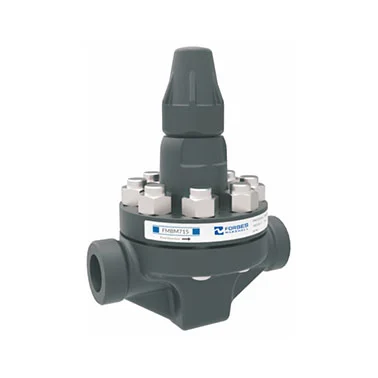
Bimetallic Thermostatic Steam Trap FMBM
The Forbes Marshall Bimetallic Thermostatic Steam Trap (FMBM) series is specifically designed for draining high pressure and high temperature steam lines. Operating on a thermostatic principle, the valve mechanism utilises opposing forces from a valve opening spring and a temperature sensitive bimetallic strip that expands or contracts to control condensate discharge. Because it operates on temperature differential rather than density, it easily distinguishes between air and steam, providing excellent air-venting capabilities and preventing costly steam loss.
The FMBM series features highly durable forged carbon steel or alloy steel bodies equipped with a reinforced stainless steel insert, delivering ultimate protection against in-pipe erosion and corrosion. Designed to be normally open in the event of failure, the trap ensures system safety by preventing condensate backup . With variants rated from Class 900 up to Class 2500, these steam traps handle maximum allowable pressures (PMA) up to 430.9 bar g and extreme temperatures (TMA) up to 570°C.
- Temperature-Driven Bimetallic Mechanism: Utilises an internal bimetal strip assembly and spring that controls the trap opening based on condensate temperature rather than density
- Reinforced Body Construction: Built with Forged Carbon Steel (ASTM A105N) or high-grade Alloy Steel (ASTM A182 Gr. F22 / F91) and a reinforced stainless steel internal insert
- External Adjustment Screw: Features a specialised left-hand threaded external adjustment screw integrated into the cover
- Integrated Pipeline Protection: Equipped natively with an inbuilt check valve (NRV ball) and a stainless steel strainer screen
- Inline Maintainability: Constructed with a removable top cover and fully replaceable internal gaskets and bimetallic assemblies
 Maintenance Schedule for Steam Distribution System
Variants
Utilising forged carbon steel (Class 900), this variant is optimised for conditions up to 45 bar g at 425°C.
Upgraded to a Class 1500 carbon steel body, safely managing continuous operations up to 100 bar g at 425°C.
Formed from Alloy Steel F22, these Class 1500 traps manage extremely high temperatures of up to 530°C.
The highest-tier Class 2500 traps, available in Alloy Steel F22 or F91, capable of enduring immense pressures up to 210 bar g at 525°C.
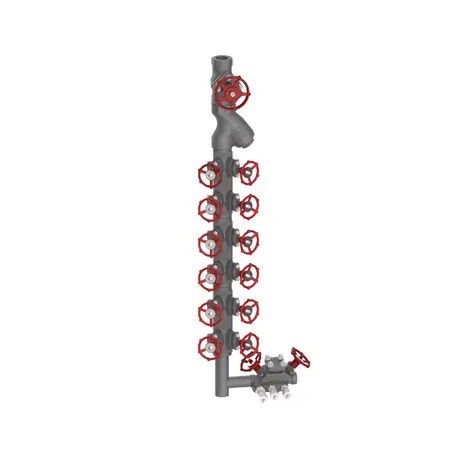 Steam and Condensate Manifolds FMSCM
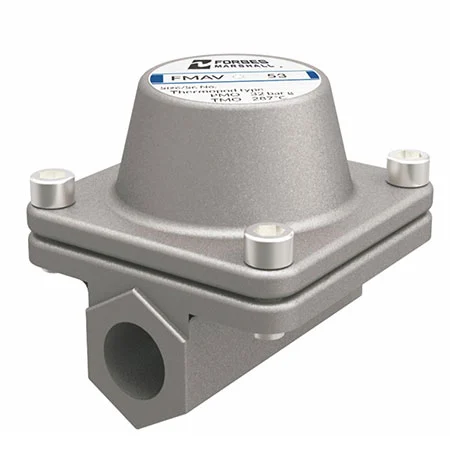 Air Vents for Steam Systems FMAV
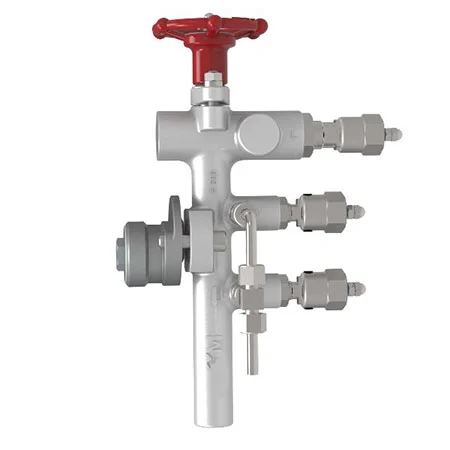 Forbes Marshall Pipeline Connectors FMPC
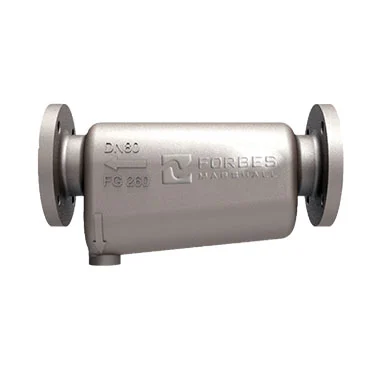 Steam Moisture Separator FMSEP
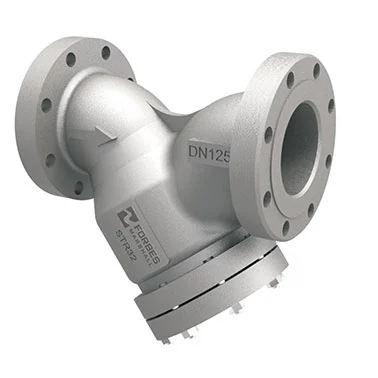 Strainers FMSTR
Frequently Asked Questions
Forbes Marshall bimetallic steam traps are designed to drain high-pressure, high-temperature steam lines for efficient air and condensate removal without steam loss.
Available in various sizes and connection types, they are adaptable to diverse system requirements.
FMBM traps feature in-line repairability, external adjustment for discharge temperature, and built-in strainers for ease of maintenance.
You can easily adjust the discharge temperature by turning the external adjustment screw located under the cover cap nut. Turning the screw anti-clockwise (1/4 turn) reduces the temperature by 10°C for more subcooling, while turning it clockwise increases the temperature by 10°C.
Yes, the Forbes Marshall FMBM series can distinguish between air and steam because it operates based on temperature differences rather than fluid density. This allows the trap’s bimetallic elements to remain open to quickly vent cooler air and non-condensable gases during start-up, and snap shut when hot steam reaches the trap.
You can clean the internal strainer by completely disengaging the adjustment screw (turning it clockwise) and opening the steam inlet valve slightly to trigger a strong purging action that blows out impurities. If manual cleaning is required, the trap can be isolated and depressurized, allowing you to remove the top cover and pull out the stainless steel strainer screen for inspection.
