
Troubleshooting Guide: Two Orifice Float Trap
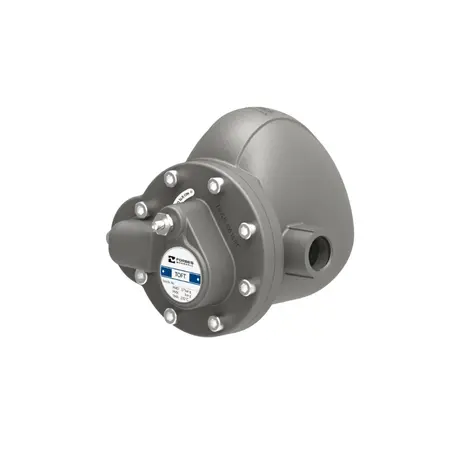
The Forbes Marshall Two Orifice Float Trap (TOFT) is designed to efficiently handle varying condensate loads at startup, normal running, and peak conditions. It features a modular design with SG iron construction and stainless steel internals, including two orifices operated by a single float. The TOFT also includes a built-in strainer, automatic air venting, and an optional steam lock release (SLR) to ensure continuous, efficient operation without air binding or steam locking.
Here is a quick troubleshooting guide to resolve common problems regarding condensate discharge and leakages.
Maintenance Safety Reminder: Before You Troubleshoot
- Isolation and Depressurisation: Always isolate the steam trap from both the supply and return lines. Ensure the system is fully depressurised and vented to the atmosphere. Never assume a system is depressurised just because a gauge reads zero.
- Temperature Normalisation: Allow the unit to cool down to a safe temperature before handling to avoid burns. Discharging fluid can reach temperatures of 100°C or 212°F.
- Protective Equipment: Use appropriate protective clothing to guard against high temperatures, chemicals, and falling objects.
- Gasket Handling: Be cautious when handling cover gaskets, as they may contain a thin stainless steel sheet that can cause injury if not handled carefully.
- Authorised Personnel: All work should be supervised or performed by competent, trained personnel.
Two Orifice Float Trap (TOFT) Troubleshooting Guide
| Failure Mode | Possible Cause | Remedy |
| Not discharging at all (Trap surface temperature is low) | Blocked strainer | Check for and clear any blockages in the strainer. |
| Incorrect installation | Verify the flow direction arrows on the cover casting and the nameplate on the base. | |
| Differential pressure too high | If actual differential pressure exceeds the design limit (ΔP), the trap may fail closed; check for and clean blockages in the main valve. | |
| Not discharging at all (Trap surface temperature is high) | Steam locking | Adjust the Steam Lock Release (SLR) by closing it fully and then opening it by 1/4th turn. |
| Punctured float | Replace the ball float and investigate the process for water hammering to prevent recurrence. | |
| Leaking live steam | Deposition in main valve | Clean the main valve assembly; if necessary, lap the seating area or lightly stamp a stainless steel ball onto it. |
| Body leakage | Tighten cover bolts to the recommended torque of 47-50 Nm. Check and replace any damaged gaskets. | |
| Not discharging enough condensate | Incorrect sizing | Verify the trap size is adequate for the condensate load. |
| Internal blockage | Check for partial blockages in the inlet strainer, thermostatic valve seat, or main valve assembly. | |
| Back pressure issues | Ensure all bypass valves are closed. Check back pressure against capacity charts and install non-return valves (NRVs) if multiple traps share a return line. |