
Steam Tracing Rationalisation in Refineries
– Saturated low-pressure steam is the ideal heating medium for tracing applications due to its higher latent heat content and efficient heat transfer co-efficient, especially compared to superheated medium-pressure (MP) steam.
– Steam tracing rationalisation involves selecting the correct steam pressure for product tracing to maximise latent heat usage and maintain required temperatures cost-effectively.
– Implementing rationalisation leads to significant operational improvements, including overall lower steam consumption, improved Energy Intensive Index (EII), and increased Gross Refinery Margin (GRM).
The Crucial Role of Steam Tracing in Industrial Processes
Steam tracing is a form of heat tracing that utilises steam as the heating medium to prevent critical process fluids (like heavy hydrocarbons) from solidifying or becoming too viscous in pipelines. This is essential for maintaining process fluidity and operational safety in industries such as petroleum refining.
Steam Pressure and Temperature Profiles:
- Low Pressure (LP) Steam: Condensing temperature around 150-180 °C.
- Medium Pressure (MP) Steam: Condensing temperature around 200-215 °C.
- High Pressure (HP) Steam: Condensing temperature around 250-270 °C.
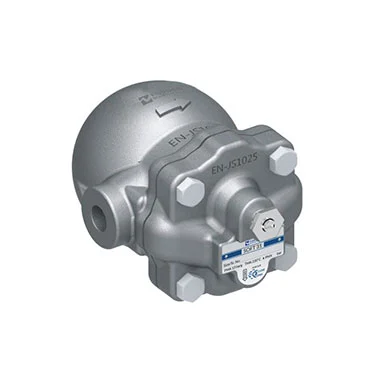
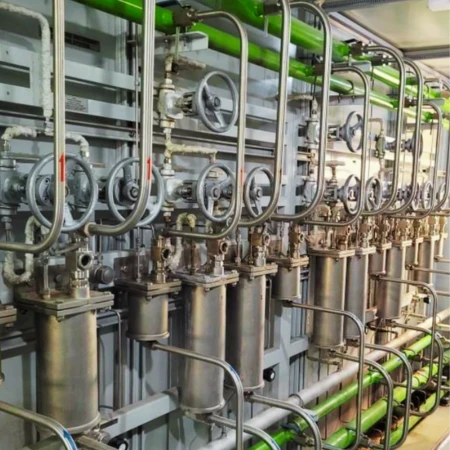
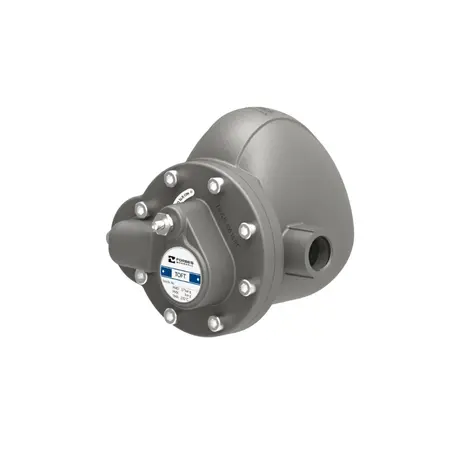
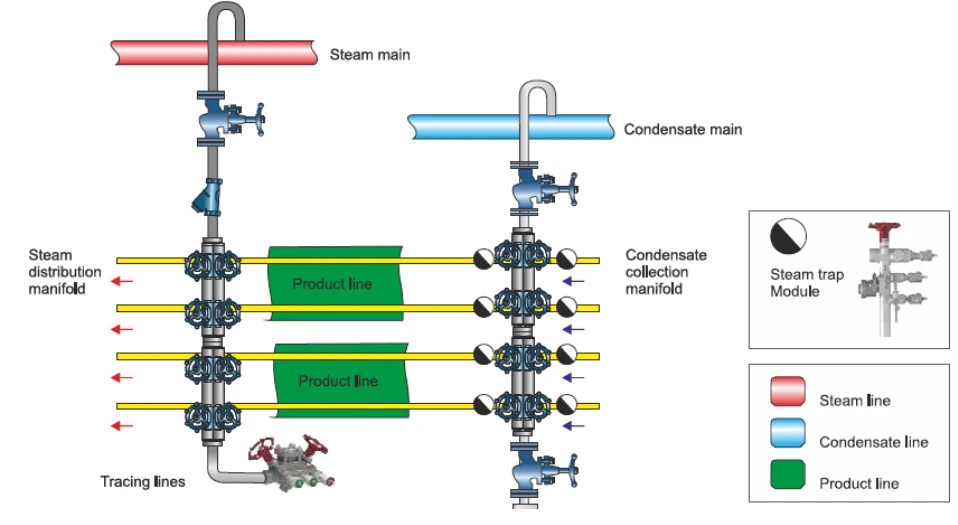
Steam is delivered to individual circuits via steam supply manifolds. The resulting condensate is efficiently removed using pipeline connectors and tracer line traps, collected at condensate collection manifolds, and often returned to condensate headers using steam operated pump traps.
Understanding Critical Tracing
For processes requiring highly uniform temperature maintenance, Critical Tracing or Steam Jacketing is often employed. In this unique configuration, the core process pipe is enclosed by a larger outer pipe. Steam travels through the annular space between the two pipes, ensuring the heating medium contacts the entire surface of the process pipe. This maximises the surface area for even heating.
This method facilitates heat transfer through convection, providing maximum thermal capability for large temperature differences (∆T).
Steam Tracing Rationalisation
Rationalisation is the strategic process of determining the correct steam pressure for product tracing to achieve cost-effectiveness and productivity. The goal is to provide the most suitable steam pressure to maintain required temperature profiles while maximising the use of latent heat based on the characteristics of the product being traced.
The following table illustrates common products in a refinery setting that typically require steam tracing to maintain product temperatures above 90 °C:
| Product Name | Required Temperature |
| Heavy Vacuum Gas Oil (HVGO) | > 90 ° C |
| HFLO | > 90 ° C |
| Light Vacuum Gas Oil (LVGO) | > 90 ° C |
| PFL | > 90 ° C |
| Reduced Crude Oil (RCO) | > 90 ° C |
| Slops | > 90 ° C |
| VGO | > 90 ° C |
| VR | > 90 ° C |
| VS (Vac Slops) | > 90 ° C |
Industry Recommendation: Considering safety and design factors, it is generally advisable to use low pressure steam (3.5 to 4 barG) for tracing these products.
Objectives of Steam Rationalisation for Enhanced Energy Efficiency
Steam Rationalisation projects are driven by clear operational goals aimed at optimising steam system performance:
- Identify existing and potential steam connections for the tracing network.
- Check the feasibility of implementing low-pressure steam connections for the current tracing network.
- Analyse the existing network to ensure correct pressure and temperature application.
- Propose economical alternate options for the current steam tracing setup.
- Optimise net steam consumption throughout the tracing network.
- Suggest necessary corrections for improved and efficient system performance.
Case Study: Optimising a Crude Distillation Unit
In a specific petroleum refinery’s crude oil distillation unit, medium pressure (18 barG) steam was initially used for tracing. This is often suboptimal because medium pressure steam is frequently superheated and therefore possesses a lower heat transfer co-efficient, which makes it less ideal for tracing applications. Saturated steam—which LP steam usually is—is far more effective for heating purposes due to its higher latent heat.
Following a comprehensive system study, it was confirmed that the heat requirement could be met by switching to low pressure steam at 5 barG, without changing the number of steam tracers. By implementing LP tracing, the refinery successfully rationalised and optimised its overall steam consumption.
The transition was successful because low pressure saturated steam provides higher latent heat, enabling optimum heat usage.
Benefits of Implementation
The key feedback received after implementing steam tracing rationalisation was directly tied to core business metrics:
- Overall lower steam consumption.
- Improved Energy Intensive Index (EII).
- Increased Gross Refinery Margin (GRM).
- Reduced utility cost.
In summary, Steam Tracing Rationalisation is not just a technical adjustment; it is a critical strategy for modern refineries to achieve superior energy performance and profitability. By strategically shifting from higher-pressure, less-efficient steam to saturated low-pressure steam, facilities can harness higher latent heat for tracing, successfully maintaining product temperatures while drastically reducing overall utility costs.