
Maintenance and Troubleshooting Guide for Single Orifice Float Trap (SOFT)
Single Orifice Float Traps (SOFT) are continuous discharge mechanical steam traps designed to efficiently remove condensate from process equipment. Utilising the buoyancy principle, these traps maintain optimum process efficiency by preventing condensate backup whilst ensuring zero live steam loss when operating correctly.
This comprehensive technical guide covers the essential maintenance and troubleshooting procedures for the complete line of Forbes Marshall Single Orifice Float Traps, including the SOFT31, SOFT53-HC, SOFT54, SOFT510, and SOFT53-X variants.
How to Identify Your SOFT Model Number
Before executing any maintenance or ordering replacement spares, it is important to identify your exact model configuration to match pressure limits and dimensional parameters. Every SOFT unit is fitted with a permanent stainless steel nameplate riveted to the base casting. Use this nameplate to identify the model, size, maximum allowable pressure and temperature.
SOFT Variants and Material of Construction (MoC)
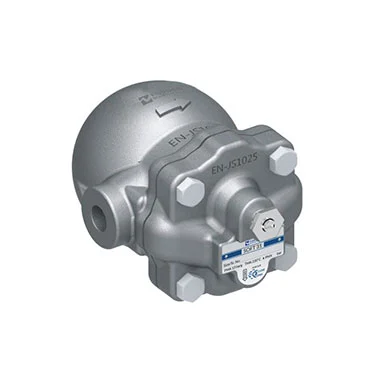
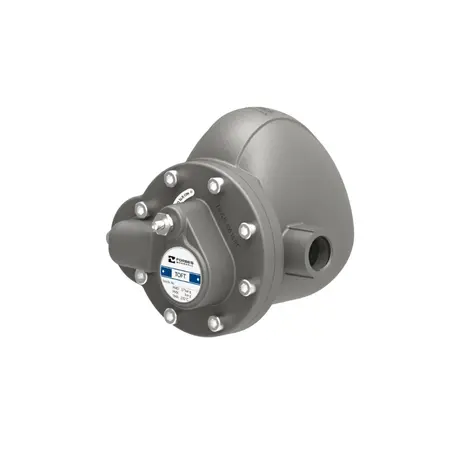
- SOFT31 (Cast Iron Series): Recognisable by its cast iron body construction and dome-shaped cover layout. Smaller nominal sizes (DN15–25) are physically compact and stamped with EN-JS1025, while DN40–50 iterations feature a distinct rectangular-to-hexagonal flange profile.
- SOFT54 (High-Pressure Carbon Steel – Small): A single-size DN25 cast steel high-pressure module engineered for high-pressure applications up to 42 bar g. It features a robust, diamond-profile 4-bolt base-to-cover orientation.
- SOFT510 (High-Pressure Forged Steel): Constructed entirely from forged steel (ASTM A105N). Unlike side-dome variants, it uses a straight vertical cylindrical body profile with a circular top cover secured by heavy-duty 8-bolt arrays.
- SOFT53-HC (High Capacity Series): Massive cast steel traps built for high condensate loads in DN80 and DN100 sizes. They are easily identified by integrated mounting feet designed for floor level horizontal installation.
- SOFT53-X (High-Capacity Steel with Thermostatic Vent): Sized at DN100, this high-capacity cast steel unit is easily distinguished by its wide twin-chamber body geometry designed to handle extensive automatic air venting.
Single Orifice Float Trap (SOFT) Troubleshooting Guide
| Failure Mode | Possible Cause | Recommended Technical Remedy |
|---|---|---|
| Not Discharging At All (Surface temperature of the trap body is low) |
|
|
| Not Discharging At All (Surface temperature of the trap body is high) | The steam trap has become "steam locked" because steam has entered the trap mechanism ahead of the condensate. |
|
| Leaking Live Steam (Live steam continuously blowing into the return line) |
|
|
| Steam Leaking from Flange |
|
|
| Reduced Capacity / Condensate Flooding |
|
|
Important Operational Rules for Diagnosis
- Flash Steam vs. Live Steam Identification:
Because condensate discharges at or near steam saturation temperature, a physical pressure reduction across the seat orifice naturally causes a portion of the fluid to immediately boil into flash steam. This produces a high-velocity, turbulent mixture of condensate mist and steam at the outlet. This normal thermodynamic phenomenon should not be misdiagnosed as a live steam leak. - SOFT53-HC Double-Seated Design Characteristic:
The SOFT53-HC utilises a double-seated internal valve mechanism. By design, double-seated assemblies may experience microscopic passing in their fully closed orientation. If your process condensate load drops below the residual leakage threshold (roughly 0.5% of the trap’s full capacity), the unit will naturally vent a nominal trace of steam.
Single Orifice Float Trap (SOFT) Routine Maintenance Guide
| Parameters / Tasks to Execute | Immediately | Daily | Weekly | Monthly | Quarterly | Half-Yearly | Annually |
|---|---|---|---|---|---|---|---|
| Visual Inspection for External Joint Leaks | - | Y | - | - | - | - | - |
| Arresting/Repairing Confirmed External Leaks | Y | - | - | - | - | - | - |
| Testing Medium-Pressure Traps (up to 17.5 bar g) | - | - | Y | - | - | - | - |
| Testing High-Pressure Traps (above 17.5 bar g) | - | Y | Y | - | - | - | - |
| Repair/Replace Traps showing Internal Leakage | Y | - | - | - | - | - | - |
| Clean Upstream Strainer Screens | - | - | - | Y | Y | - | - |
| Dismantle and Clean Internal Mechanisms | - | - | - | - | Y | Y | Y |