
Guide to Balance of Plant (BOP) Vibration Monitoring
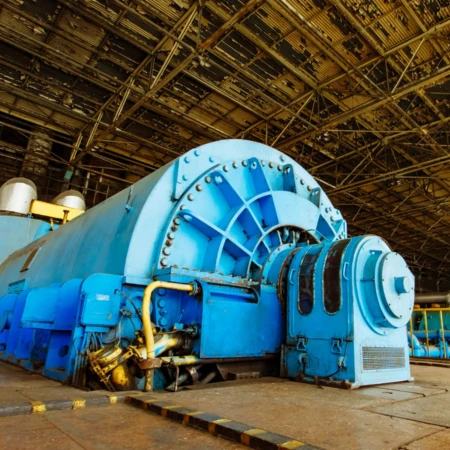
While protecting massive primary assets like steam and gas turbines are critical, a power plant or manufacturing facility cannot operate without its ancillary equipment or: the Balance of Plant (BOP) equipment.
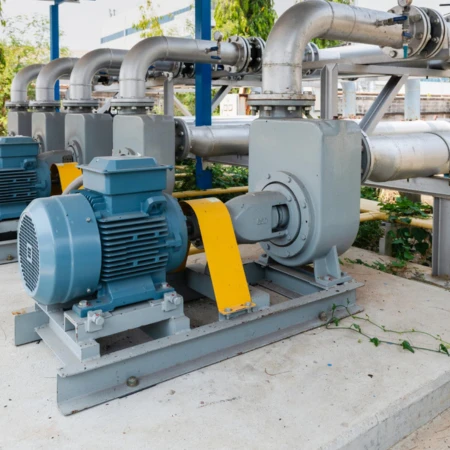
BOP equipment include auxiliary pumps, fans, motors, blowers, and gearboxes that help keep the core process running. Because these assets are frequently classified as secondary, they are often left unmonitored or relegated to manual, periodic route inspections. This creates massive operational blind spots.
This article outlines the core principles of Balance of Plant vibration monitoring, common machinery configurations, and how to select the right sensor architecture to achieve plant-wide reliability.
What is Balance of Plant (BOP) Equipment?
In power plants and other manufacturing industries, Balance of Plant (BOP) refers to all supporting components and auxiliary systems necessary to deliver the primary output, excluding the main generating unit.
Common types of auxiliary equipment include:
- Pumps: Boiler feed pumps, cooling water pumps, and lube oil pumps.
- Fans and Blowers: Forced Draft (FD) fans, Induced Draft (ID) fans, and primary air fans.
- Drivers and Transmissions: Electric motors (ranging from fractional horsepower to multi-megawatt units) and speed-reducing or speed-increasing gearboxes.
While a single BOP component failure might not always trigger an immediate and catastrophic plant shutdown, it regularly causes forced derates (partial power loss) i.e. expensive secondary damage, and maintenance backlogs.
Core Monitoring Configurations for BOP Assets
Unlike main turbines, which feature highly standardised Turbine Supervisory Instrument (TSI) setups, BOP assets vary widely in design, bearing types, and criticality. Implementing a cost-effective predictive maintenance strategy requires tailoring the monitoring setup to the specific machine type.
Balance of Plant or BOP equipment generally fall into two primary structural categories:
1. Rolling Element (Anti-Friction) Bearing Assemblies
Many standard industrial motors, pumps, and fans utilise rolling element bearings. Because these bearings have very low casing damping, mechanical faults and subsurface defects directly transmit shockwaves and high-frequency energy to the bearing housing.
- Standard Setup: These machines are monitored using casing-mounted contact sensors.
- Channel Architecture: A baseline protection system typically employs two contact sensors:
- Radial Vibration Channel: One sensor mounted on the inboard bearing housing perpendicular to the shaft to capture unbalance and looseness.
- Axial Vibration Channel: A second contact sensor mounted on the outboard bearing housing parallel to the shaft centerline to diagnose coupling misalignment and excessive axial thrust.
- Primary Metric: Velocity is the standard measurement metric for these frequencies, though high-frequency faults utilise acceleration.
2.Fluid Film (Journal/Sleeve) Bearing Assemblies
High-energy, high-criticality BOP assets such as heavy-duty centrifugal compressors, large boiler feed pumps, and multi-megawatt motors rely on fluid film journal bearings. In these systems, the shaft floats on a thin film of oil. Casing-mounted sensors cannot accurately read the shaft’s true behavior because the oil film dampens out the vibration before it reaches the external housing.
- Standard Setup: These machines require non-contact proximity probes or eddy current transducers.
- Channel Architecture: Probes are permanently mounted directly through the bearing housing to measure the dynamic physical gap between the sensor tip and the rotating shaft.
- Primary Metric: Displacement (measured in mils or micrometers, peak-to-peak) is the absolute standard for tracking relative shaft motion and clearance boundaries.
Sensor Selection Guide for Common Balance of Plant (BOP) Equipment
| Equipment Type | Bearing Type | Sensor Type | Measurement Mode |
|---|---|---|---|
| Standard Pumps | Anti-Friction (AF) / Journal | Contact / Proximity | Velocity or Displacement |
| Boiler Feed Pumps | Journal (High Speed) | Proximity Probes | Displacement |
| Industrial Fans / Blowers | Anti-Friction (AF) | Contact Sensors | Velocity |
| Large Industrial Fans | Journal | Proximity Probes | Displacement |
| Electric Motors (>1200 RPM) | Anti-Friction (AF) | Contact Sensors | Velocity |
| Critical Process Motors | Journal | Proximity Probes | Displacement |
| Gearboxes and Speed switchers | Anti-Friction / Roller | Contact Accelerometers | Acceleration |
Primary Failure Modes Detected in BOP Equipment
By deploying continuous or wireless vibration monitoring across your balance of plant infrastructure, maintenance teams can diagnose and intercept the big 3 mechanical catalysts before they result in functional failures:
Repeating Dynamic Forces
- Imbalance: Heavy spots on fan blades or pump impellers caused by erosion, dirt buildup, or casting cavities exert a rotating force that scales exponentially with machine speed.
- Misalignment: Parallel or angular misalignment between a motor and a pump bends the coupling, forcing components to fight each other and generating severe double-frequency vibrational signatures.
Mechanical Looseness
Structural looseness such as cracked foundations, loose hold-down bolts, or excessive internal bearing clearances amplifies minor baseline vibrations into destructive forces, destroying seals and structural integrity.
High-Frequency Component Fatigue
- Gear Mesh Defects: Worn, chipped, or improperly backlashed gear teeth generate high frequency impacts.
- Rolling Element Defects: Spalls, cracks, or pitting on the inner raceway, outer raceway, or balls of an anti-friction bearing create distinct shock pulses that can only be captured using high-frequency accelerometers.
Achieving Plantwide Balance of Plant Equipment Reliability
Transitioning your Balance of Plant strategy from reactive fixes to an automated, predictive framework drastically reduces a facility’s total cost of ownership. By systematically matching contact velocity sensors to standard anti-friction assets and non-contact eddy current probes to high-speed journal-bearing machinery, plant operators eliminate blind spots, safeguard auxiliary lines, and ensure the entire ecosystem runs at peak thermodynamic efficiency.