
The Critical Importance of Certified Pressure Parts in Steam and Water Analysis Systems (SWAS)
In high-pressure boiler operations, occupational health and safety is of prime importance and prioritised. Steam and Water Analysis Systems also called SWAS play a vital role in online monitoring by sampling steam and water from boilers and turbines. However, because these samples are drawn at extreme pressures and temperatures, the safety of operators depends entirely on the integrity of your system’s design.
In modern ultra supercritical power boilers, feedwater pressures can soar up to 350 Bar, with superheated steam temperatures hovering close to 600°C. Because these samples hold massive amounts of hydraulic and thermal energy, any component failure poses a severe hazard to nearby plant personnel.
To protect the plant operators and to ensure compliance, integrating certified high pressure components validated by an Authorised Inspector (AI) or Third-Party Inspector (TPI) is a non-negotiable.
Understanding the SWAS Architecture
A standard SWAS package is divided into two primary sections:
- Mechanical Sampling System commonly referred to as the Wet Rack or Panel.
- Instrument / Analyser Panel.
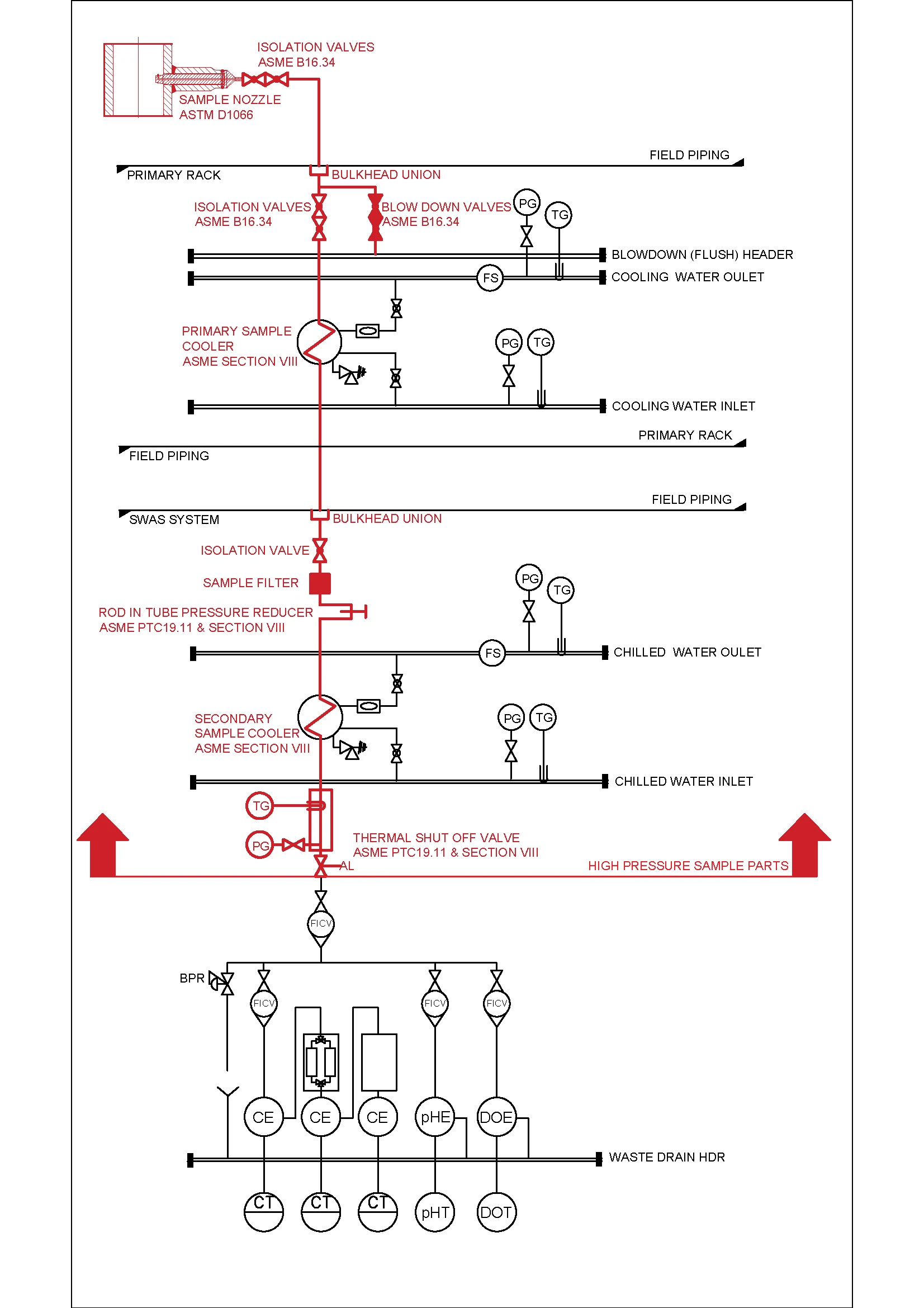
Typical P&ID for a Steam and Water Analysis System (SWAS) detailing the critical front-end components exposed to high pressure sample streams
The mechanical sampling system is engineered to systematically drop the temperature, reduce the pressure, and safely control the flow of fluid before it reaches the delicate analyser sensors. Because the front end components bear the brunt of these extreme conditions, they must be strictly designed, manufactured, and certified to withstand them.

High-pressure steam leak in an uncertified or improperly isolated SWAS wet rack, highlighting the severe occupational health and safety risks to plant operators.
The 5 Critical High-Pressure SWAS Components and Their Specifications
The five core components in a SWAS that are directly exposed to dangerous high-pressure zones during operation include:
1. Sample Isolation and Blowdown Valves
Isolation is the primary defense against human hazard. Before any SWAS package is inspected, cleaned, or repaired, the system must be isolated and subjected to Lockout/Tagout (LOTO) procedures.
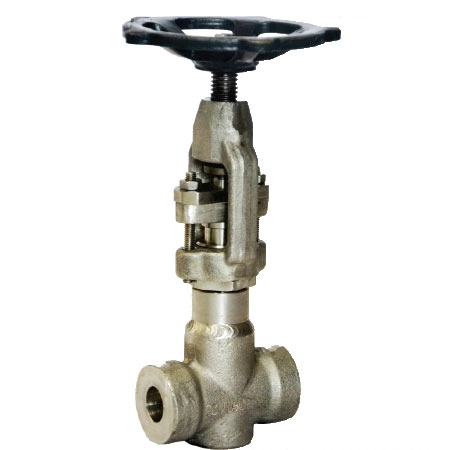
Sample Isolation Valve
- Purpose: Safely isolate hazardous energy and allow clean sample line blowdowns before bringing the SWAS package online.
- Minimum Specifications: * Forged body construction optimised for high-pressure/temperature steam.
- Metal-braided grafoil gland packing rings and gaskets.
- Non-rotating spindle design for smooth, low-wear operation.
- Compliance with ASME PTC 19.11-2008 and ASME B16.34.
2. The Sample Cooler
Positioned immediately after the isolation valve, the sample cooler is a critical counter-flow heat exchanger featuring a single or double helical coil-in-shell design.
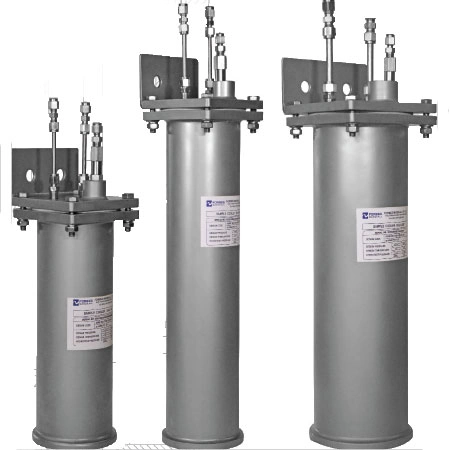
Coil-in-shell Design Sample Coolers
- Purpose: Condenses steam and rapidly cools samples down to safe atmospheric levels (below 50°C to 60°C) to protect downstream sensors. Coil failure here will instantly damage downstream instruments.
- Minimum Specifications: * Helical coils made from Stainless Steel (UNS S31600/S31603) or Inconel 625 (UNS N06625) for high-chloride environments.
- Designed as an unfired pressure vessel matching ASME Section VIII, Div 1 & 2 or PED standards.
3. High-Pressure Sample Filters
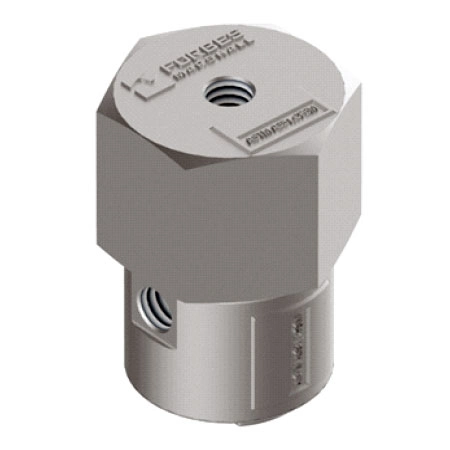
High Pressure Sample Filters
- Purpose: Traps suspended matter and particulates that would otherwise clog small, precision tubing. Because it sits downstream of the cooler but upstream of the pressure regulator, it operates under low temperature but remains under extremely high pressure.
- Minimum Specifications: * Pressure-retaining filter body constructed from a minimum of Stainless Steel (UNS S31600 / S31603).
- Certified to ASME Section VIII Div 1 & 2 or PED.
4. Rod-in-Tube Sample Pressure Reducers
Modern plants regularly alter boiler loads to match grid requirements, creating sliding pressure variations throughout the day.
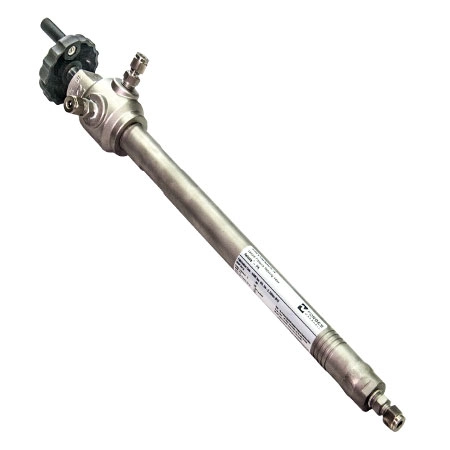
Rod-in-tube Type Sample Pressure Reducing Valve
- Purpose: Allows operators to modulate and maintain precise, stable flow to the analysers despite fluctuating boiler pressures.
Minimum Specifications: * Must utilise a robust Rod-in-Tube design inline with ASME PTC 19.11-2008.- Built from Stainless Steel (UNS S31600 / S31603) and certified under ASME Sec VIII or PED.
5. Thermal Shut-Off Valves (TSOV)
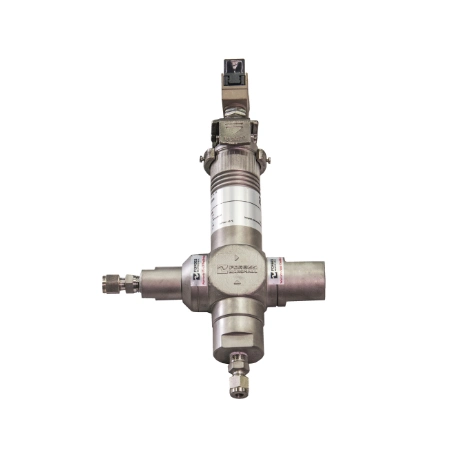
Thermal Shut-Off Valve
- Purpose: A mechanical safety device that acts as a circuit breaker for your analyser panel. Under normal conditions, it experiences low pressure. However, if the cooling water supply to the sample cooler fails, the TSOV instantly trips to block the hot sample from destroying the analysers at which point it is subjected to full system pressure.
- Minimum Specifications: * Mechanical operation with a strict manual reset arrangement.
- Must latch securely in the closed position upon cooling failure.
- Pressure-retaining parts compliant with ASME Sec VIII, Div 1 & 2 / PED and constructed of Stainless Steel.
Why Third-Party Certification is Vital for SWAS Components
Relying on self-regulated component involves massive risk. Third-party certification ensures complete systemic compliance in three critical areas:
Personnel Safety & Plant Insurance
Even though SWAS sample flow rates are low, the energy density within those lines is incredibly high. A sudden rupture can be fatal. Consequently, global plant insurance policies are frequently tied directly to the certification of pressure-retaining parts.
Regulatory Compliance
In many jurisdictions, local boiler safety authorities will strictly prohibit a power plant from firing up its boilers unless all connected pressure parts carry verified certifications. Major globally recognised regulatory bodies include:
- ASME (USA & Canada)
- PED (Europe)
- IBR (Indian Subcontinent)
- DOSH (Malaysia)
Design Validation and Quality Control
During a massive new project build, it is virtually impossible for an end-user to manually audit and check the engineering calculations of every small valve or filter in a SWAS package. Third-party certification provides instant, audited proof from an Authorised Inspector (AI) that the material selection, design math, and manufacturing quality control perfectly match international standards.
| Component Name | Primary Function | Core Material Requirement | Design & Certification Standards |
|---|---|---|---|
| Sample Isolation & Blowdown Valves | Safely isolates hazardous energy and cleans sample lines via LOTO procedures. | Forged Body, Metal Braided Grafoil gland packing & gaskets. | ASME PTC 19.11-2008, ASME B16.34, PED, IBR, DOSH |
| Sample Cooler | Condenses steam and reduces high sample temperatures to safe atmospheric levels. | Helical Coils: Stainless Steel (UNS S31600/S31603) or Inconel 625. | ASME PTC-19.11, ASME Section VIII Div 1 & 2, PED, IBR, DOSH |
| High-Pressure Sample Filters | Removes suspended particulates to protect small tubing from clogging. | Minimum Stainless Steel (UNS S31600 / S31603). | ASME Section VIII Div 1 & 2, PED, IBR, DOSH |
| Rod-in-Tube Pressure Reducer | Maintains a precise, stable sample flow despite sliding boiler pressures. | Minimum Stainless Steel (UNS S31600 / S31603). | ASME PTC 19.11-2008, ASME Section VIII, PED, IBR, DOSH |
| Thermal Shut-Off Valve (TSOV) | Acts as a circuit breaker; blocks sample flow if cooling water fails. | Minimum Stainless Steel (UNS S31600 / S31603) with Manual Reset. | ASME PTC 19.11-2008, ASME Section VIII Div 1 & 2, PED, IBR, DOSH |
Certified pressure parts in a SWAS package are an indispensable investment. They bridge the gap between rigorous international safety standards and real world operational reliability, keeping your plant compliant and your operators safe.